Engine & Filters
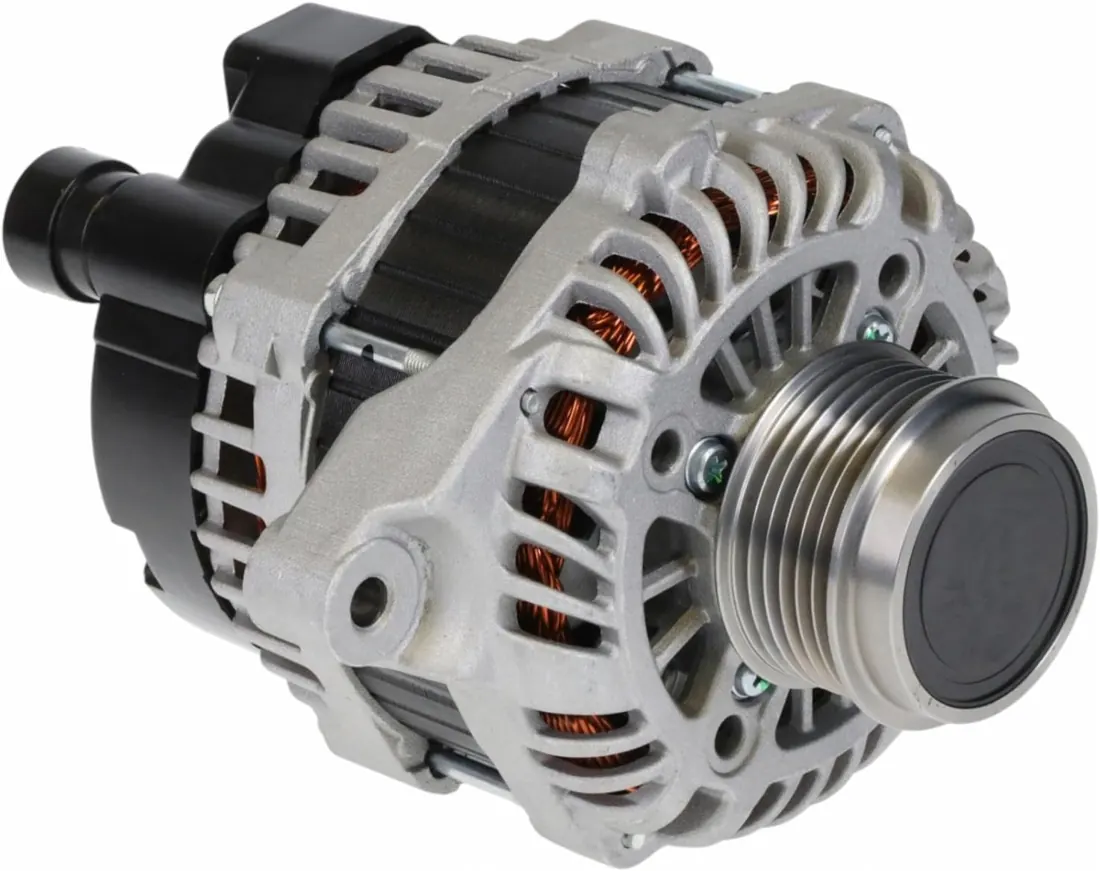
OEG Parts New Alternator for Honda Fit 1.5L (2015-2016)
Engine bay — front of engine, driven by the serpentine belt$166.95
View details
Diagnose & repair
The alternator's job is simple: keep the battery charged and power the car's electronics once the engine is running. When it starts to fail, the symptoms often get blamed on the battery first — which means a lot of drivers replace a perfectly good battery before finding the real problem.
Dimming headlights or interior lights, especially when you turn on the AC, radio or defroster at the same time, are often the earliest sign — the alternator can't keep up with demand. A dashboard battery-shaped warning light is the car telling you directly. As it worsens, expect a battery that won't hold a charge (even a brand-new one), slow-cranking or a no-start after the car has been running fine, and sometimes a whining, grinding or growling noise from the belt area as the internal bearings wear.
With the engine running, a multimeter across the battery terminals should read about 13.8-14.5 volts. If it reads close to 12V (or lower) with the engine on, the alternator likely isn't charging properly. If you don't have a multimeter, most auto parts stores will test your alternator and battery for free while they're still in the car.
Dimming or flickering headlights and interior lights, a battery warning light on the dash, a weak or dead battery even after a fresh jump, and — on many cars — a whining or growling noise from the belt area. Electric accessories like power windows may also feel slower than usual.
A battery stores charge; the alternator makes it while the engine runs. If your car starts fine after sitting overnight but dies after 20-30 minutes of driving with accessories on, the alternator is the more likely suspect. A cheap way to check: with the engine running, a multimeter across the battery terminals should read roughly 13.8-14.5V — at or near 12V with the engine running usually means the alternator isn't charging.
For a short distance, maybe — but the battery is only carrying the load until it runs out, and once it does, the car will stall and won't restart. It's not a repair to postpone once you've confirmed it's the alternator.
On most front-wheel-drive cars it's a manageable weekend job with basic hand tools — remove the serpentine belt, disconnect the wiring and battery negative terminal, unbolt the old unit, and reverse the process. The main variance is how much else you have to remove to reach it, which depends heavily on the specific engine bay.